Destinations, Spain

Gluten-free in Galicia

Hotel Costa Vella
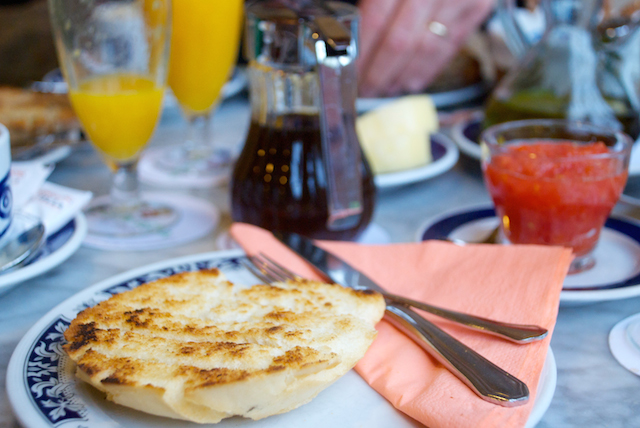
Breakfast at Hotel Costa Vella, complete with gluten-free bread

Deciding to uproot myself and move to Spain came with its fair share of anxiety. A large part of that anxiety was due, of course, to the uncertainty of what I would be eating for the next year. And since Spain is a hefty player in the culinary world, I wanted to maximize  Surprisingly, though, being gluten-free in Spain was a breeze. Since I lived in Santiago de Compostela, this post specifically addresses going gluten-free in Galicia, though it is largely applicable to Spain as a whole.

At the supermercado

Living on a tight budget, this is where I got most of my grub. Overall, I found that Mercadona, Carrefour, and Familia had the best selection of gluten-free specialty foods – everything from magdalenas (small breakfast muffins) to pasta to cereal to flour. The frozen food section of the Carrefour in Santiago even carries gluten-free frozen empanadas and churros. When looking outside the specialty gluten-free section, scan labels for the words “sin gluten” (gluten-free). Spain does a pretty good job at labeling their products.

My most uncomfortable experience with grocery food was not actually caused by gluten. With many brands, eating a gluten-free loaf of sandwich bread (“pan de molde”) or baguette (“pan rústico”) is like eating a brick of vegetable shortening. Namely because the second ingredient is vegetable shortening. Check ingredients before you buy to avoid digestive displeasure.


Dining out

Behold, I give you the two keys to your eating success:

Soy celíaca.

No puedo comer gluten.

With these two phrases, Galicia became my oyster. The majority of restaurants understood the implications of these phrases (perhaps with some help from “no harina” – no flour). In my experience, Galician cuisine uses straightforward ingredients. What you see is, more than likely, what you get.

Galician cuisine is heavy on seafood. Seafood is often prepared simply, though there are some specialty seafood dishes that use sauces (ex. almejas a la marinera, or clams with marinera sauce) that you should avoid if you cannot ascertain the sauce ingredients. Caldo gallego, a traditional Galician soup, can also be troublesome (but worth investigating because it is scrumptious). Seafood a la plancha (grilled) or al vapor (steamed) is just as common and a safer bet. Food that is cocido has been boiled; potatoes are commonly cooked this way. Spanish tortilla, a simple, savory staple often served as a tapa, is traditionally composed of potato, oil, and egg – also a good go-to item.

The Asociación de Celíacos de Galicia has compiled a list of restaurants that have received training in how to safely prepare gluten-free meals for consumers and have committed to providing gluten-free menu options. However, I never used this list even once and was easily accommodated everywhere I dined. Additionally, if you feel less than confident in your Spanish-speaking abilities, Celiac Travel offers a great free Spanish dining card.

On planes and trains

Once upon a time, on a long-haul train from Santiago de IMG_1745Compostela to Madrid, I wandered into the dining car and found that it sold gluten-free pastries. I was elated and ate my calorie bomb in blissful appreciation. In general, however, the dining car is friend to neither your wallet nor your stomach. Be prepared, be prepared. Pack nuts, fruit, and sandwiches to get you through your journey. The same goes for air travel. Once upon a time in the Málaga airport (in Andalucía, not Galicia, mind you) I found two happy oddities: a gluten-free brownie at Starbucks and a gluten-free vending machine (!). Again: exception, not the rule. Airports lean heavily on the sandwich side. Be prepared.

Hope your stomach is as happy as mine!

-MB

Destinations, Spain

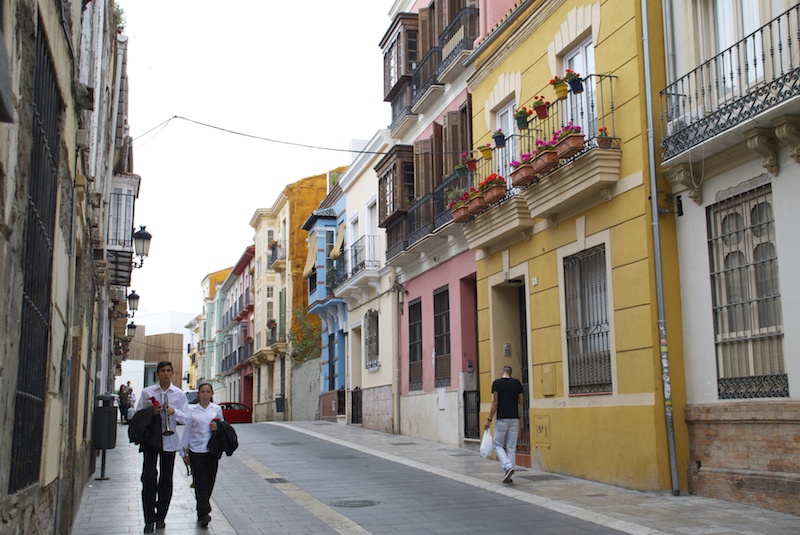
Málaga {time for Finnish lessons}

DSC_0010

I spent a lot more time in Málaga than I had initially planned, mostly because I realized on the train halfway to Cádiz that I’d left my trench coat and scarf in the hostel (next to a sign that said, in essence, “Items Left Behind Are Lost Forever”). I immediately stress-ate three plums and resolved to return.

In Málaga, I befriended a clan of Germans with a penchant for shisha; a Finn with a penchant for pre-dawn language lessons; and an American engineering student with a penchant for yoga. With them, and the aforementioned processions, I got to know Andalucía’s second biggest city.

Sights worth the seeing:

  1. Alcazaba – A gorgeous example of Moorish architecture, this fortress is located next to the Roman amphitheater, and is particularly striking near sunset.
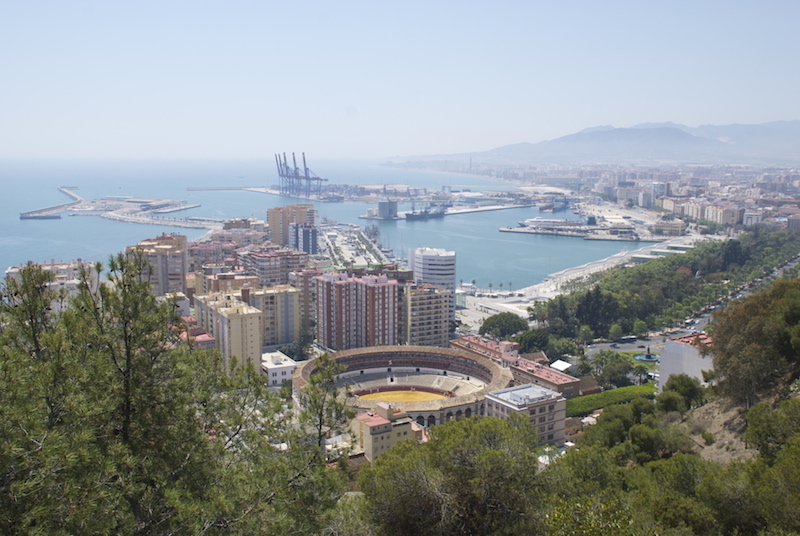
  2. Castillo de Gibralfaro – It’s a climb, and there isn’t much left besides the ramparts, but the views of the city and port are breathtaking. 
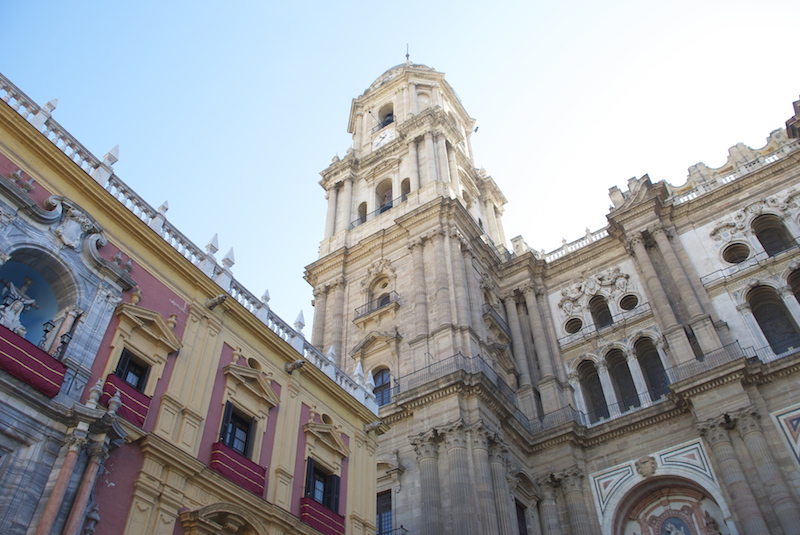
  3. Catedral de Málaga. Cathedrals are not usually my thing, but for some reason, Málaga’s Cathedral struck me. Unlike the gray, gothic cathedrals I’ve been used to, this cathedral had color accents that set it apart: a mint-green organ with gold accents and an exterior facade with red marble, for example.
  4. Playa Malagueta. Dotted with straw umbrellas and infused with the scent of pescado frito (fried fish), Málaga’s main beach is a refreshing escape and within walking distance from city center.
  5. Pablo Picasso Museum. I’ll admit, this was not initially at the top of my list. I’m not Pablo Picasso’s biggest fan – his work is a little jarring for me. I ended up going to this museum when I realized I could get in for free with my Spanish student I.D. I’m so pleased I did. Picasso’s portfolio of work is way more extensive than I realized, stretching beyond the the cubism I knew him for. My respect for the man skyrocketed. Just as powerful as the artwork was the narration of the museum. I’ll leave you with one of my favorite quotes:

“A good painting – any painting! – ought to bristle with razor blades.” – André Malraux

Playa Malagueta
Playa Malagueta
Alcazaba de Málaga
Alcazaba de Málaga
Catedral de Málaga
Catedral de Málaga

DSC_0202
IMG_1860

DSC_0181
Climbing to Castillo Gibralfaro
Plaza de Toros
Plaza de Toros & Porto de Málaga

DSC_0024

Destinations, Spain

Málaga {it’s procession time.}

How terrifying are they on a scale of one to crying

Having lived for six months in a Spain of torrential rain, I was thrilled to finally explore Andalucía, the place textbooks are made of. Andalucía became my Semana Santa destination for its sun, beaches, and the uniqueness of its Semana Santa celebrations. First stop? Málaga.

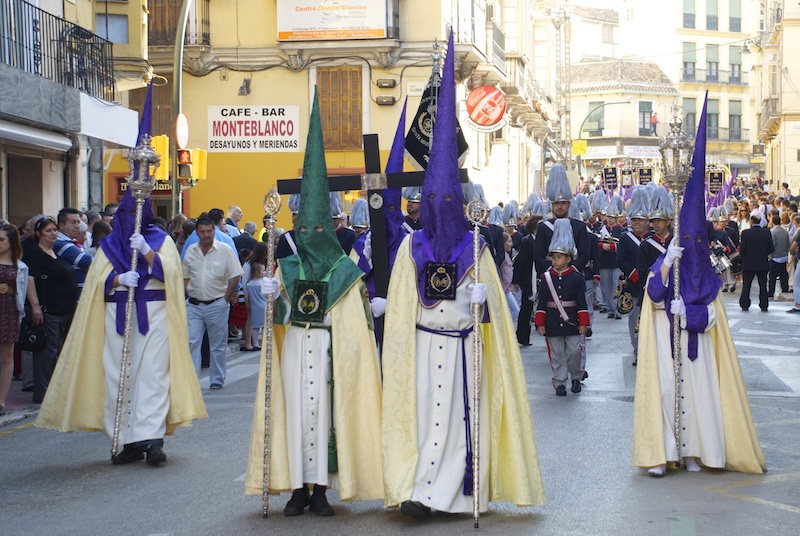
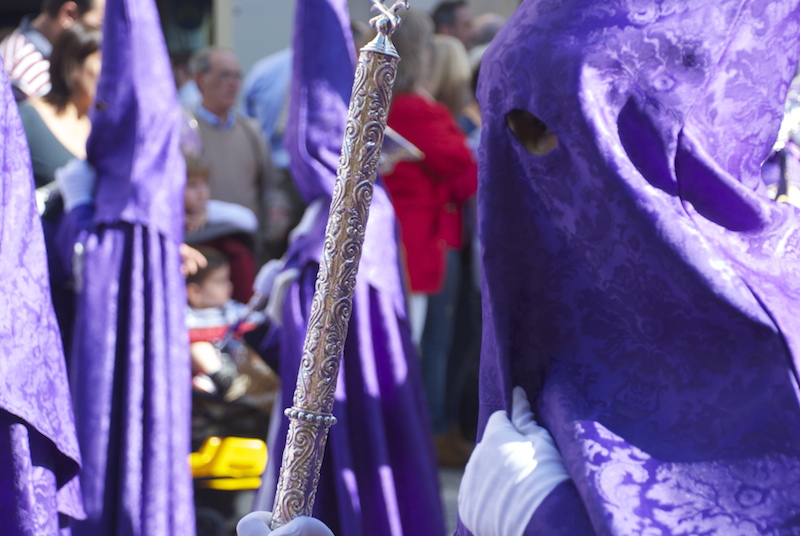
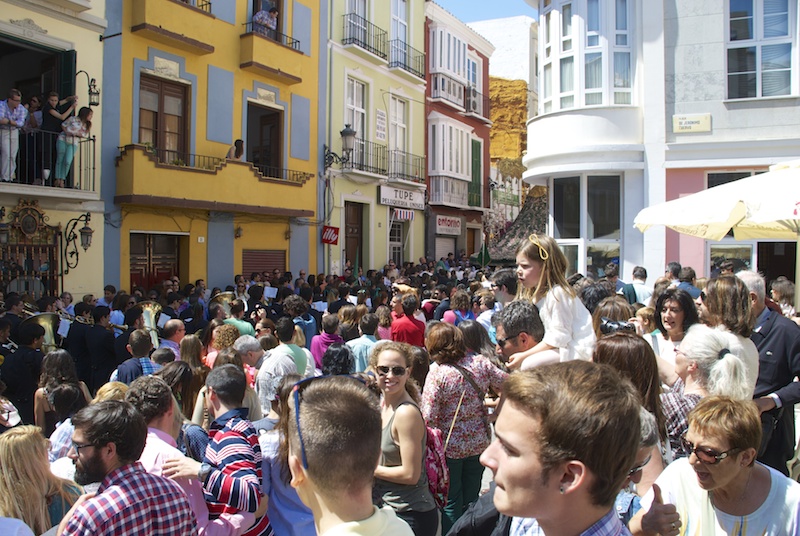
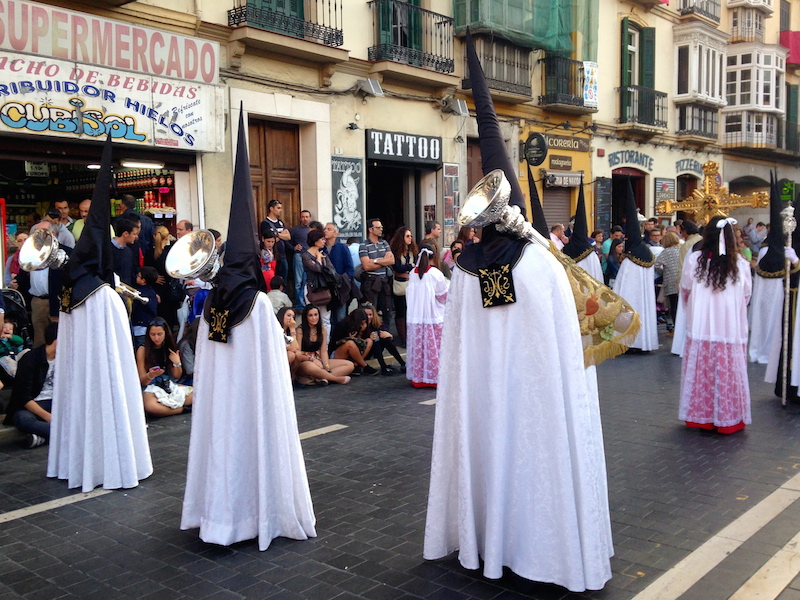
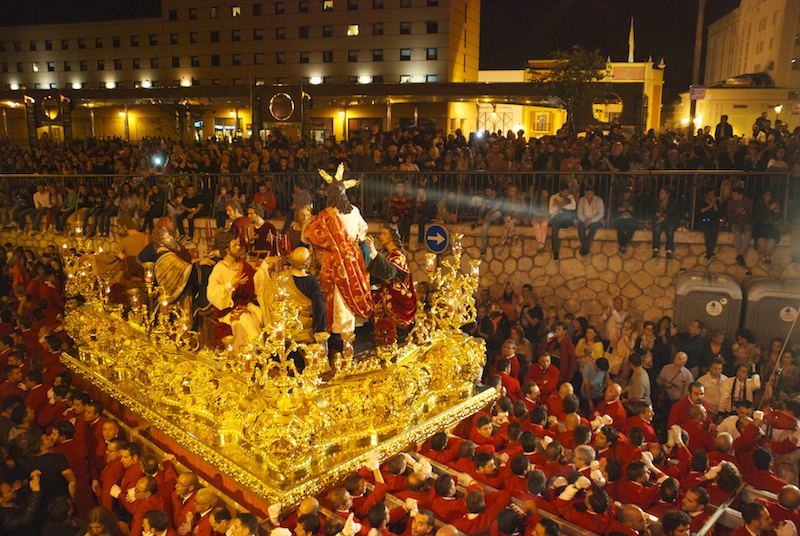
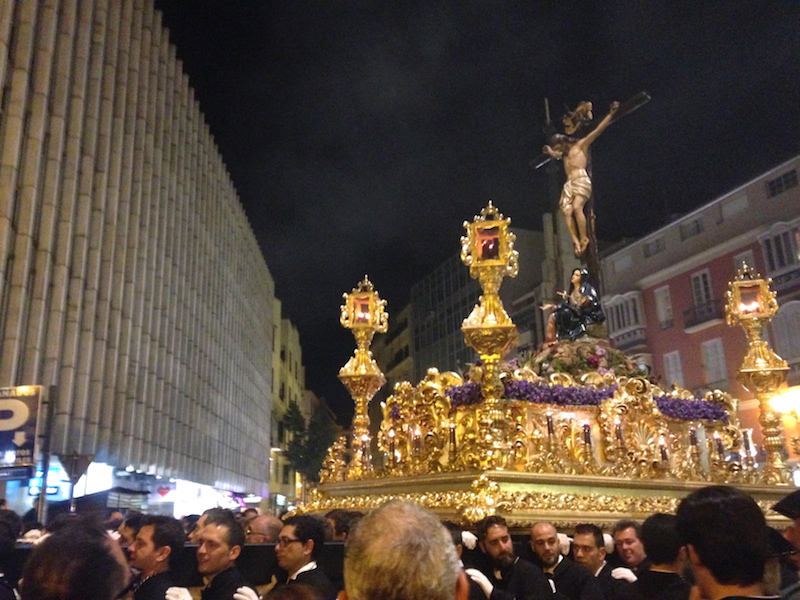
If you don’t already know, Semana Santa (“Holy Week”) is the week preceding Easter Sunday. Spain has a deep religious history, and Andalucía in particular celebrates Semana Santa with unbridled enthusiasm. Processions go on all hours of the day and night, and are composed of floats and float-bearers, marching bands, and nazarenos.

The processions were impossible miss, clogging every key street in the old town. Nazarenos, the dudes with the pointy caps, gave an eerie vibe to the proceedings. Apparently their faces are covered out of penitence (read more here), but let’s be real, they look like the KKK. That’s enough to set anyone on edge. There’s no connection between the nazerenos and the KKK, but it was disorienting to see wives and kids hugging nazerenos just as you would any other performer in a parade.

For the me, the novelty of the processions lasted all of two days. You’ve got to have a hearty tolerance of crowds and swaying to survive during Semana Santa. If you don’t, you will melt into a helpless puddle of rage. I was in good company, though. A lot of Andalucians flee their region during Semana Santa because it is such a hot mess. I was glad I went, though, because it is truly a remarkable sight.

DSC_1331

Not having itDSC_1408

DSC_1411

DSC_1428
Bird’s-eye view of processions from my hostel (Patio 19).
DSC_1423
Incense.
DSC_1425
Different brotherhoods from the city carried intricate floats depicting scenes from Jesus’ ministry for hours on end.

DSC_1433

IMG_1898

DSC_0177
Four o’clock in the morning, from the hostel window. Four. O. Clock.


Destinations, On the run, Spain

On the Run [Race Day Edition]: El Medio Maratón Gran Bahía Vig-Bay

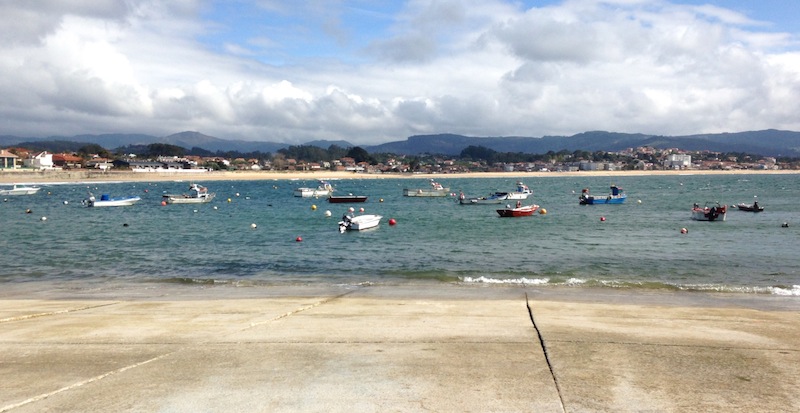
Porto de Panxón
Porto de Panxón (Port of Panxón)

Running is one of the best ways to see a new place, if for no other reason than for the sheer amount of ground you can cover. With organized races, though, you gain a new advantage: you, the runner, rule the roads cars once did.

Last month, I did some ruling of my own in the Vig-Bay Half-Marathon. This was my fourth half-marathon overall and my second one abroad. The first one, the Royal Parks Half-Marathon in London, England, left some big shoes to fill. It looped through Hyde Park, the banks of the Thames, and Trafalgar Square, to name a few of the sights. The Vig-Bay, located in Galicia and smaller in scale, was a different animal.

The race route connected Vigo to nearby Bayona, hugging the coast and including views of the gorgeous Islas Cíes. Though the weather was a half-hearted drizzle, it’s hard to complain when you’re running right next to the ocean. I was thoroughly distracted the entire time, gaping around every bend. There was even a Celtic band, complete with bagpipes, churning out just the screeching/heart-pumping tunes you need in a half-marathon.

As I have picked up on, though, running has not really taken off among the chicas here in Spain. The proportion of girls running was drastically lower than in any other race I’ve done – roughly ten percent of all participants (!). Let’s be real, though…that just made me feel like a badass. Especially when I made my personal best time (cue fist pump).

IMG_1774
Noncommittally drizzly weather, true to Galician form
IMG_1785
Runners soothed their muscles at the beach at the finish line (Baiona/Bayona)
Flan
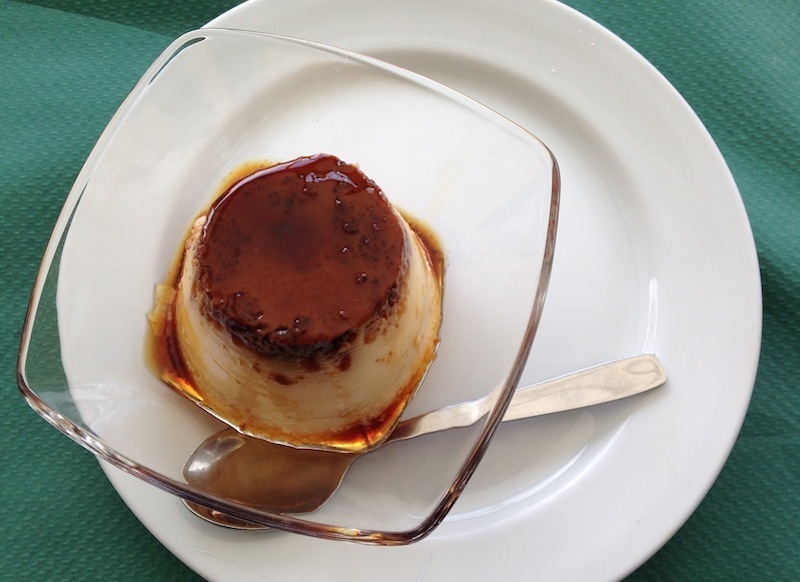
Flan, the recovery food of champions (Restaurante O Peirao, Panxón)
Vigo
A post-race visit to Vigo

Lace up those sneaks, folks!
MB
Destinations, Spain

Carnaval comida

Now that Carnaval has been over for a solid month, I figured I’d talk about it. So much of Galician culture is expressed through food, and Carnaval is no exception. Due to some enormous generosity, even my gluten-free stomach got to partake in the festivities. There are two recurring elements in Galician Carnaval cookery: pigs and anis (a liquor made mostly in southern Europe). So without further ado, here are three staples of Carnaval cuisine in Galicia. Warning: staple two contains graphic images for vegetarians.

1. Orejas

DSC_0459
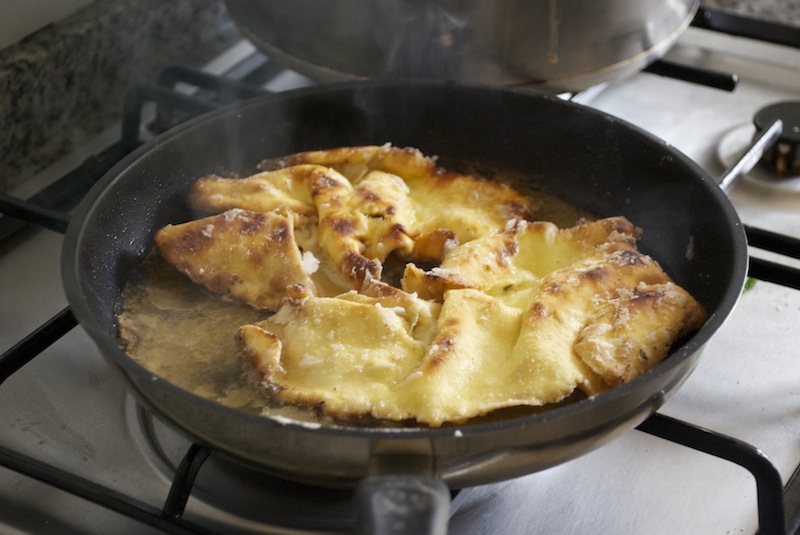
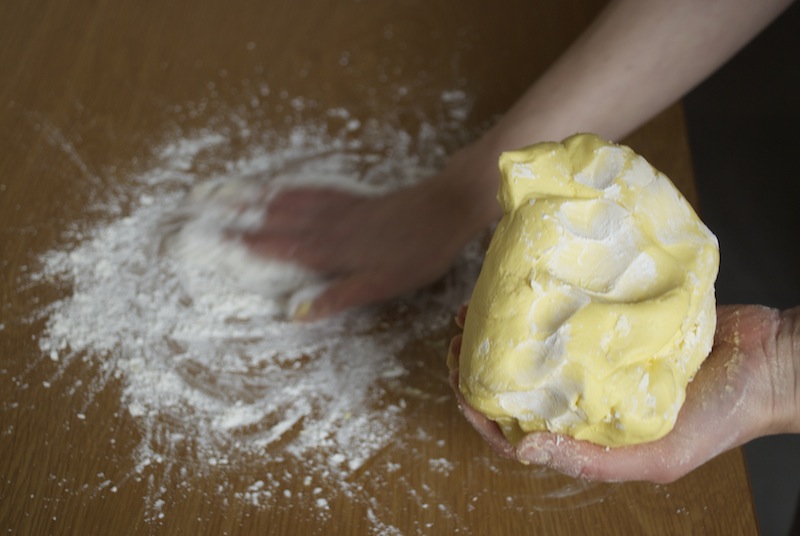
My ever-lovely carpool chauffeur shared this tradition with me. “Orejas” means “ears” in Spanish, and these pastries are so called because they are shaped like pig ears. The dough is fried in pork grease, which gives it its distinctive flavor. The taste of these light, crumpled triangles is accented with sprinkled sugar. Doing orejas gluten-free, however, was quite the challenge (to the surprise of everyone except me). In typical gluten-less style, my dough clung to the rolling pin like a toddler to his mom’s leg. When triangles were finally cut and stretched, they promptly broke in half. “Es otro mundo!” (It’s another world!) was the refrain of the day. As a result, my gluten-free orejas were a good deal thicker (and more troublesome to fry) than their toxic, wheaty counterparts, but I still managed to pack them away.

DSC_0440 DSC_0456 DSC_0447


2. Cocido

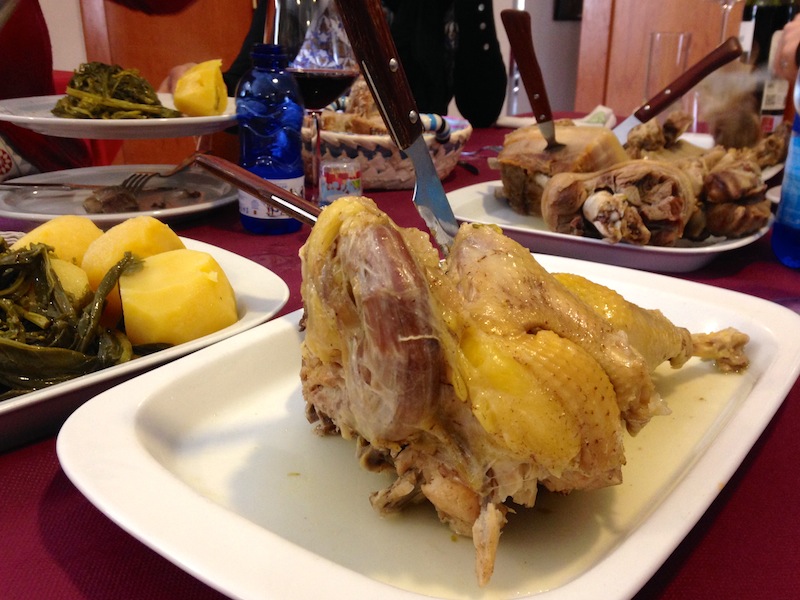
Once upon a time, I ate pig face. This act of barbarianism is a keynote of cocido, the Galician tradition of boiling and then eating all parts of the pig. Like every single part – ribs, ears, shoulders, etc. I experienced this tradition thanks to the professors of my school, who planned cocido as the “comida de entroido.” The meal was accompanied by boiled potatoes, grelos, chickpeas, and chicken. There was so much salt that I was dehydrated for a full two days after.

IMG_1430


3. Filloas

DSC_0443
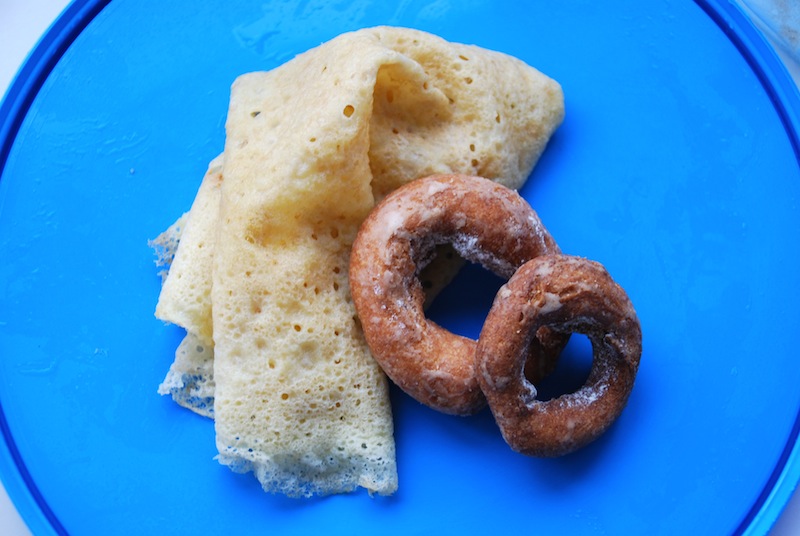
Gluten-free filloas & rosquillas (another typical pastry made with anis)

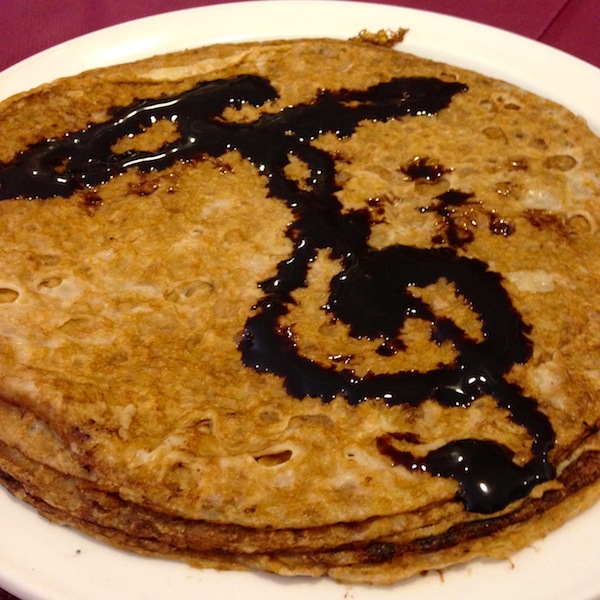
Filloas are similar to crepes – sweet, soft, floppy, and round. They are served plain or with powdered sugar, honey, or a dash of chocolate syrup. The madre of one of my celiac fifth-years was kindhearted enough to make me a box of these, gluten-free style. We’re talking light-speed consumption, people.

The music teacher’s filloa
IMG_1475
A tent in Plaza Roja housed some serious filloa production during Carnaval (Santiago de Compostela)
Destinations, Ruminations

Oxford, revisited

Bikes on Broad Street
Broad Street
University Parks
University Parks
Radcliffe Camera, Oxford
Radcliffe Camera
Port Meadow
Port Meadow
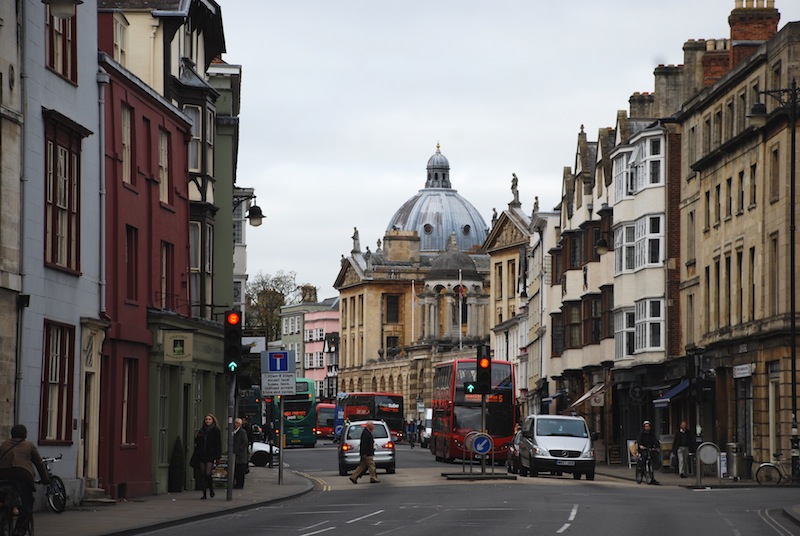
High Street, Oxford
High Street

There are days when your newsfeed works against you. Yesterday was one of those days. Three of my friends are headed back for another term at my hallowed Oxford without me. And both BuzzFeed and the NY Times decided to gang up on me and remind me why nothing, nothing can compare to my semester in the City of Dreaming Spires.

Oxford is hard to describe to people who don’t know it. I’ve tried to explain it by saying “the air smells intelligent,” which doesn’t make any real sense and, instead, makes people doubt how I ended up at Oxford in the first place. But I stand by it.

There’s a cool edge to the air that quivers with potential. I breathed it as I walked down cobblestone lanes, trying to wrap my brain around the fact that 800 years of students had strolled them before me. I breathed it as I biked down Banbury Road with my dinner gown flapping in the wind. I breathed it as I ate potatoes, potatoes, and more potatoes in a Harry Potter dining hall, sitting next to some of the smartest people in the world, who will go on to be neurosurgeons, composers, writers…leaders of the modern world. I breathed it deeply as I ran along the banks of the Isis and watched rowers’ oars beat like butterfly wings. I breathed excessively it as I hyperventilated about paper deadlines and my increasing sleep debt. Oxford was the deepest, most scintillating breath of air I’ve had. Try going back to standard oxygen after that.

If you happen to have the glorious good luck of still being an undergraduate, I urge you to check out this program to study for a term in Oxford. (And no, you don’t even have to be a UGA student!) It absolutely rocked my world. Three years have passed and I still see it as the best three months of my life. Now please, I’m going to go happy-drown in memories.

Cheers,

MB

Destinations, Ruminations, Spain

Week {20} in review

DSC_0564

This past week has been brimming with sun, and I have been eating it up like chocolate. I have been positively glued to my Chacos, froyo, shorts, and the park. The Spanish do this odd thing where instead of dressing for the weather, they dress for the season. So even though it was sunny and 70 degrees outside, coats and scarves were everywhere, and my attire was met with choruses of “fresquitaaaaa!” (“chilly,” more or less). Because I care. Anyway, last week, I

  • Scandalized the teachers at my school by wearing Chacos in March. The temperature of my toes was of grave concern to everyone.
  • Cheered Escarabote on to second place at the Annual Boiro Primary School Smackdown (a.k.a. student foot race on the beach)
  • Witnessed a riot
  • Learned how to make gluten-free orejas (a typical Carnaval food) with a teacher from my school
  • Guided a couple of visiting auxiliar friends around Santiago
Gluten-free orejas
Gluten-free orejas

DSC_0527 - Version 2

Music in the streets of Santiago
The "carrera" (race)
“Carrera” on the Boiro beachside
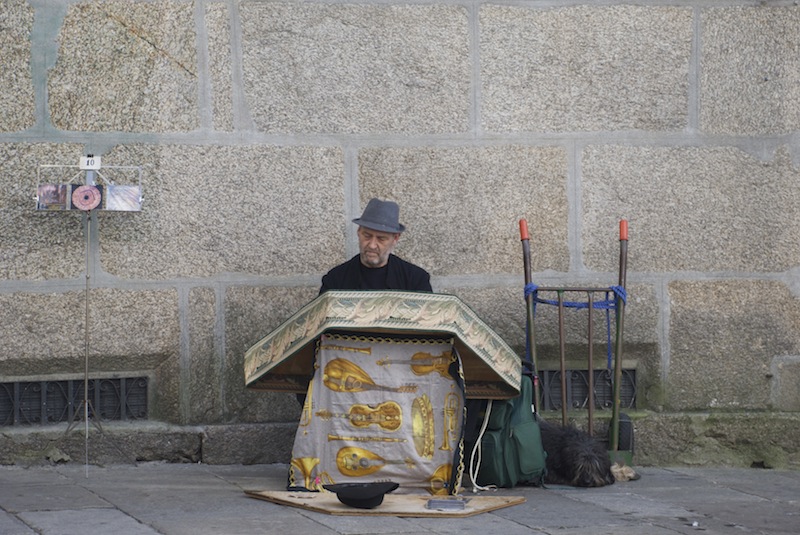
Impromptu didgeridoo concert
Tea time
Tea time in the park
DSC_0561
A cloudless cathedral